Overview
This project focused on the development of a fixed-wing vertical take-off and landing (VTOL) aircraft specifically designed for the rapid aerial transport of medical vaccines. Supported by a research grant awarded by the University Grants Commission (UGC) of Bangladesh, I contributed as a research assistant, leveraging prior expertise in unmanned aerial systems.
The research scope encompassed the comprehensive design, fabrication, and rigorous flight testing of the aircraft, which featured a modular architecture optimized for efficient disassembly and logistical transport.
Aircraft Design
The Unmanned Aerial Vehicle (UAV) was modeled employing SolidWorks 2023 and Blender3D. The structural design prioritized modularity; the wings, fuselage, tail section, and control surfaces were engineered for independent detachment, thereby facilitating streamlined logistical transport and rapid field assembly.


The structural framework integrated carbon fiber rods with precision laser-cut plywood components. Essential mounting interfaces were fabricated via 3D printing utilizing Polylactic Acid (PLA), while Depron foam sheets were utilized to construct the aerodynamic outer fuselage.
Aircraft Building
The aircraft's construction methodology employed a hybrid structural approach, integrating laser-cut plywood elements with high-strength carbon fiber reinforcements. This modular structural paradigm was instrumental in achieving both ease of assembly and enhanced portability.
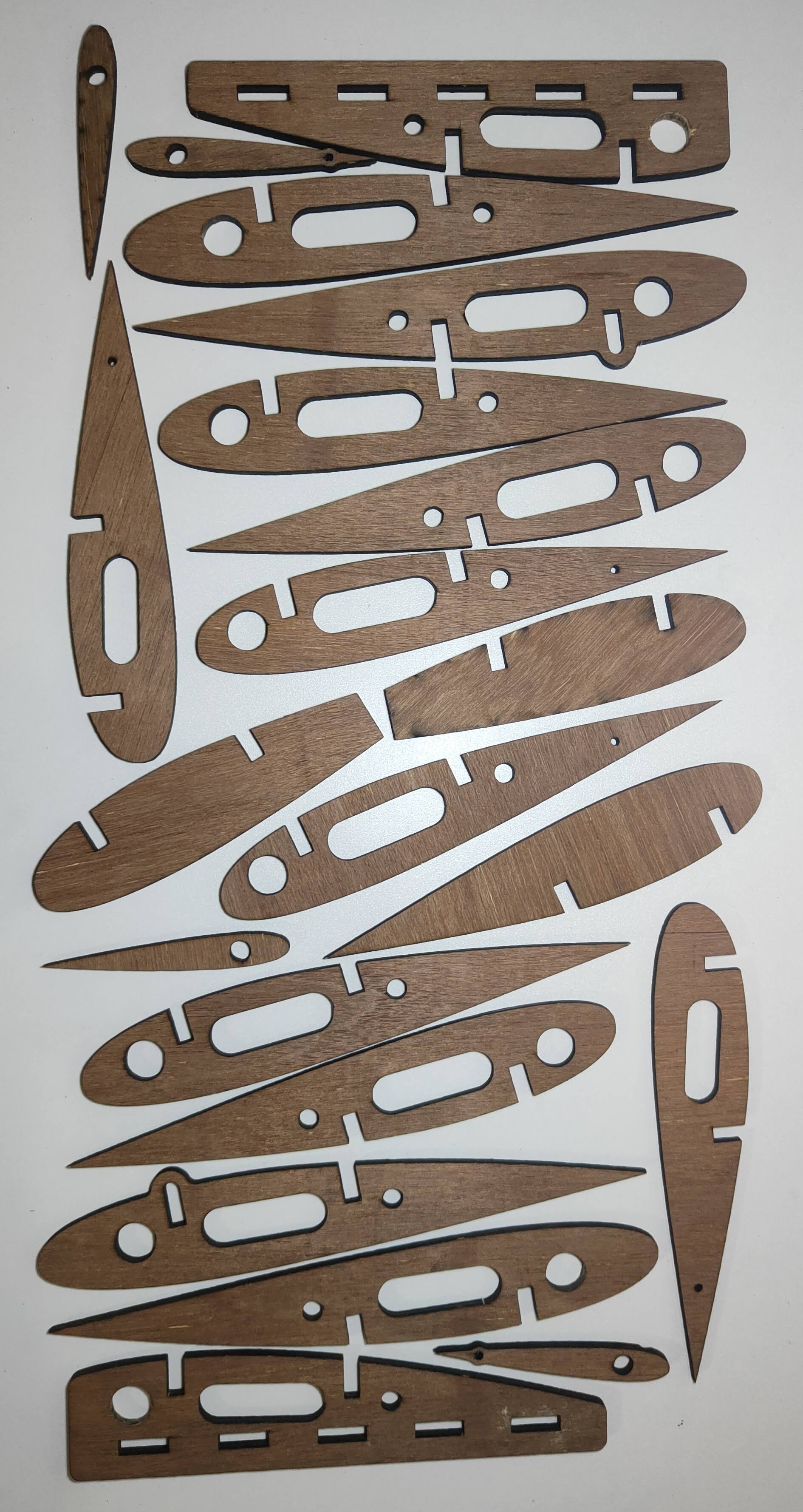
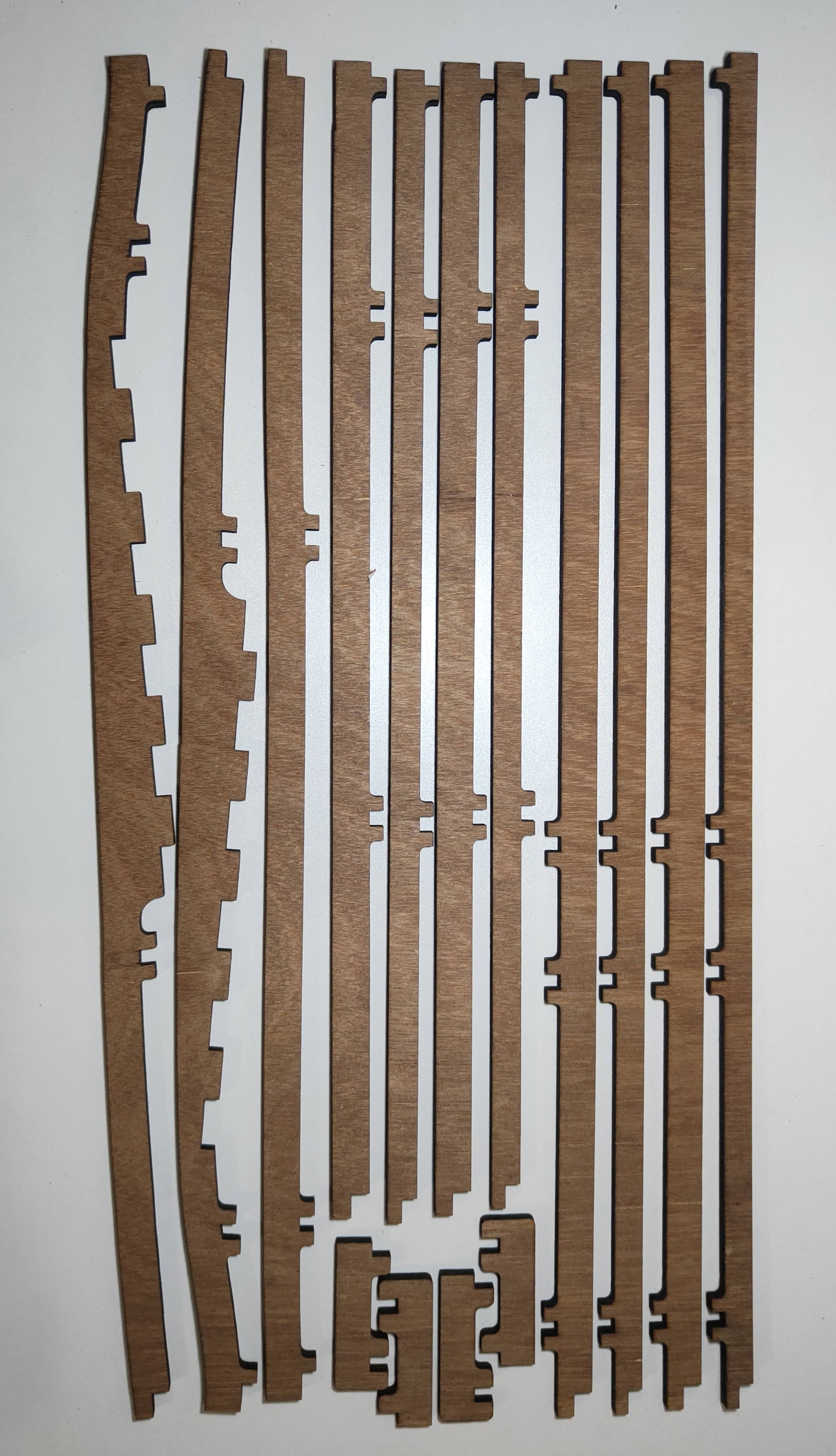
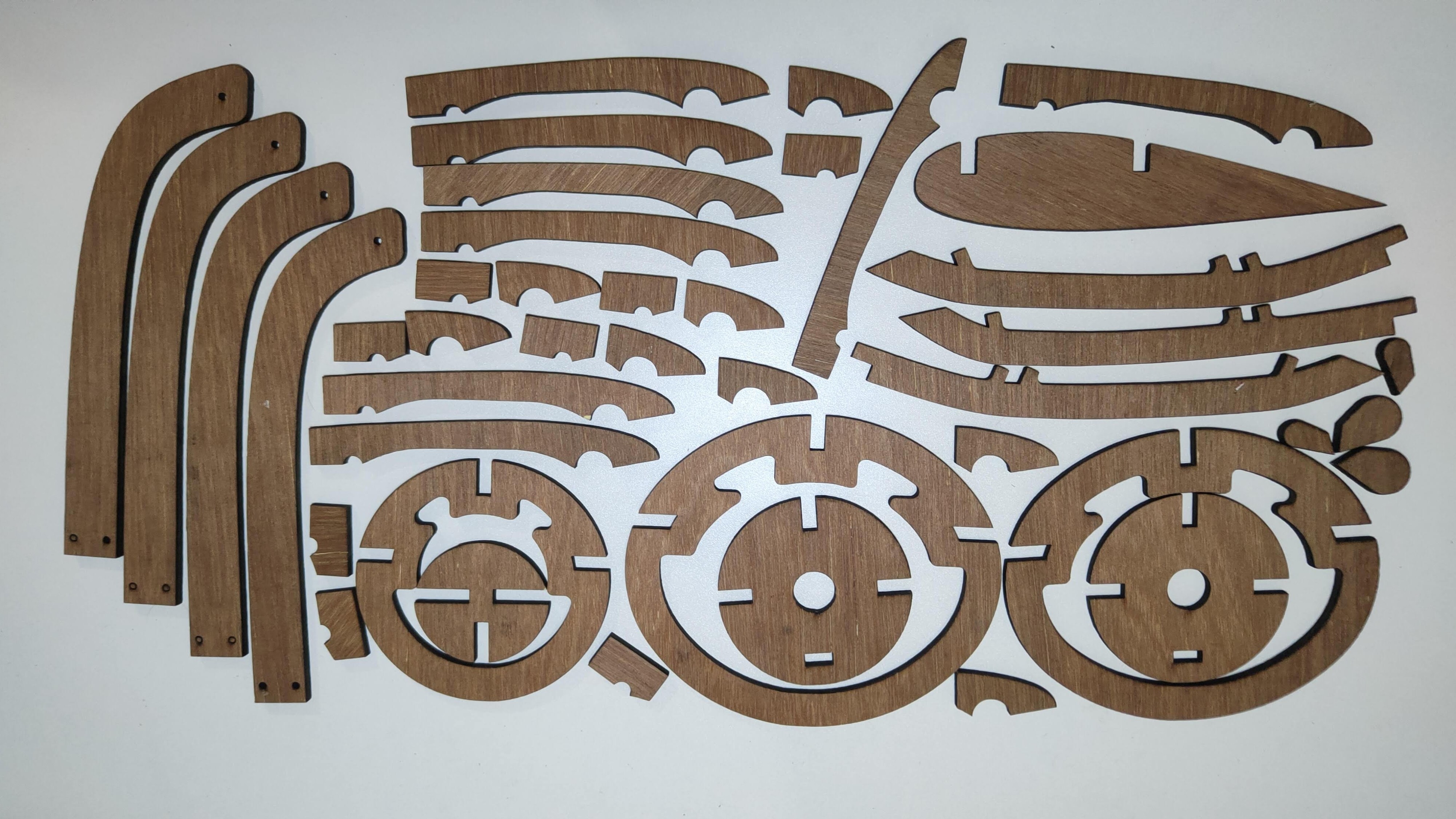
Custom mounting interfaces were additively manufactured using PLA to guarantee structural integrity and ensure a precise, low-tolerance fit for the integrated avionics and propulsion subsystems.
Flight Tests
Preliminary design constraints identified during the initial prototyping phase were systematically resolved prior to flight testing. The aircraft successfully executed vertical take-off sequences in both stabilized and GPS-guided autonomous modes, achieving an operational altitude of approximately 30 meters. Subsequent flight trials demonstrated a stable transition into forward fixed-wing flight, followed by a controlled VTOL landing sequence.
Empirical flight data indicated an average endurance of approximately 5 minutes during sustained VTOL hover operations.
- VTOL test altitude
- ~30 m
- VTOL flight duration
- ~5 min
- Take-off modes tested
- Stabilize & GPS


